News
Five changes are needed for applying base fertilizer to fruit trees in autumn
The growth and development of roots, branches, leaves, flowers, and fruits in fruit trees after spring mainly consume the stored nutrients in the tree. If the tree stores sufficient nutrients, all organs will grow vigorously and the fruit setting rate will be high; If the stored nutrients are insufficient, even spring fertilization will be ineffective, and nutritional growth and flowering and fruiting will be inhibited. Therefore, increasing the nutrient storage level of trees in the autumn of the previous year is of great significance for the production of that year. In autumn, the soil temperature is still high and the moisture content is good, which is conducive to soil microbial activity. The organic fertilizer applied decomposes quickly, the chemical fertilizer is converted quickly, and the underground roots of fruit trees are at the peak of growth and absorption. The above ground leaves are more mature, and photosynthesis is strong. Fertilization in autumn can promote both underground and above ground activities, which is more conducive to the synthesis and accumulation of photosynthetic products.
Therefore, autumn fertilization plays an important role in promoting root absorption capacity, extending leaf photosynthetic life, improving photosynthesis, and increasing nutrient reserves. According to the prominent problems in the fertilization of fruit farmers, the autumn application of base fertilizer for fruit trees needs to undergo "five reforms":
1、 Change from late to early.
Generally, after the autumn shoots of fruit trees stop growing, they enter the peak period of root growth, and fertilization should be applied as early as possible thereafter. The application of base fertilizer should be changed from late autumn and early winter application after harvesting of late maturing varieties to post harvest application of medium maturing varieties and pre harvest application of late maturing varieties.
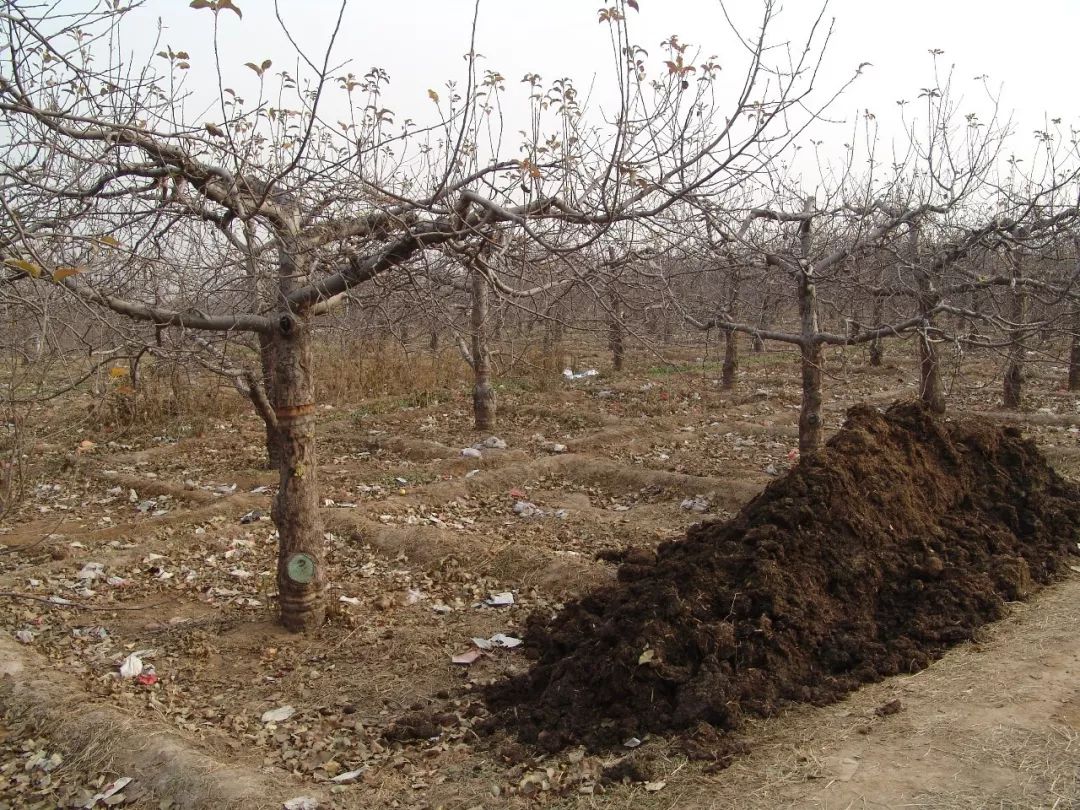
The best time to apply basal fertilizer to early maturing varieties such as Gala apples and Hongxiangsu pears is from late August to mid September; Late maturing varieties such as Red Fuji apples, Dangshan pears, and red grapes have the best effect when basal fertilizer is applied in September. For the convenience of operation, commercial bagged granular fertilizer can be manually applied in holes or grooves before fruit harvesting, and decomposed manure should be manually or mechanically applied after fruit harvesting.
2、 Change the bias to full.
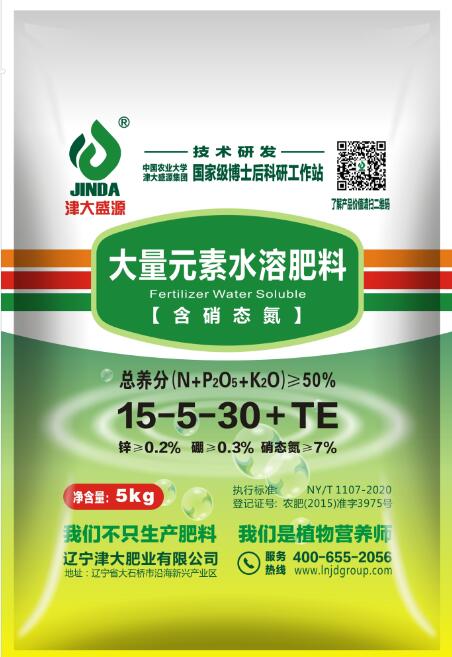
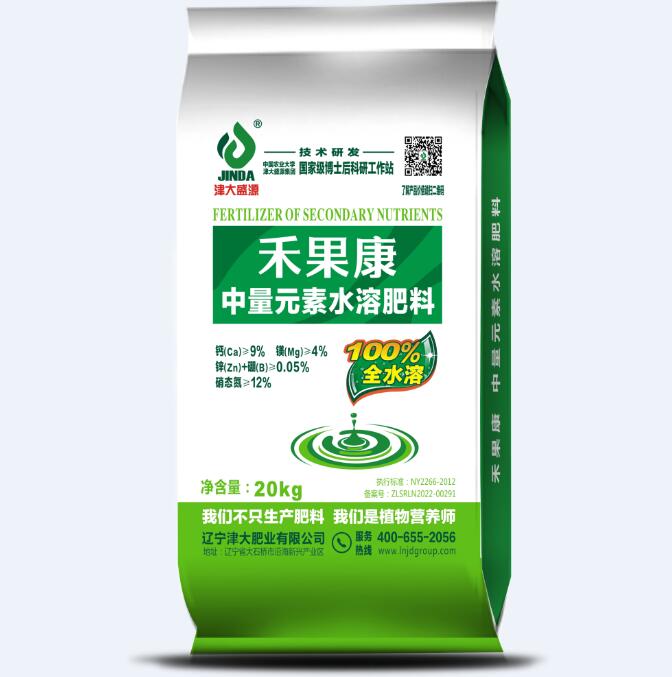
Organic fertilizer, chemical fertilizer, microbial fertilizer, and micro fertilizer all have specific functions in soil fertility, yield increase, quality improvement, and cost saving, and have equally important and irreplaceable roles. Applying fertilizers on demand is one aspect, but more importantly, achieving a combination of organic and inorganic through the rational utilization of organic resources. To promote high yield with abundant elements such as nitrogen, phosphorus, and potassium, to improve quality and alleviate physiological diseases with trace elements, to fertilize soil and improve fruit quality with farmyard manure, and to improve and purify the rhizosphere environment with microbial fertilizers to enhance root vitality, the goal is to achieve high-quality and high-yield fruit trees, fertile and healthy soil, and prolonged fruiting period.
3、 Change from near to far.
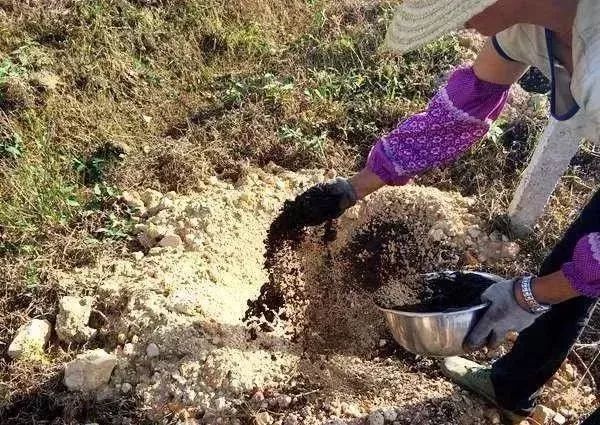
The horizontal root distribution range of general fruit trees is 2-4 times the diameter of the tree crown, and 80% of the absorbing roots are distributed in the vertical projection edge area of the outer branches of the tree crown. The reasonable location for trenching or digging holes for fertilization in fruit trees such as apples, pears, peaches, cherries, and winter jujubes should be on the outer edge of the vertical projection of the tree crown, and should not be too close to the trunk.
4、 Change shallow to deep.
Most fruit trees belong to deep rooted plants, which have a layered distribution of absorbing roots in the vertical direction. The concentrated distribution layer of the root system of kernel fruit trees such as apples and pears is generally a soil layer of 20-80 centimeters, while that of stone fruit trees such as peaches, apricots, plums, and cherries is a soil layer of 20-40 centimeters. The 5-30 cm soil layer of trees in the initial fruiting stage is the area with dense absorbing roots, while the 10-50 cm soil layer of trees in the peak fruiting stage is the area with dense absorbing roots. This requires that 80% of fertilizer be applied to the area with dense absorbing roots according to different tree ages.
5、 Change the pile to scattered.
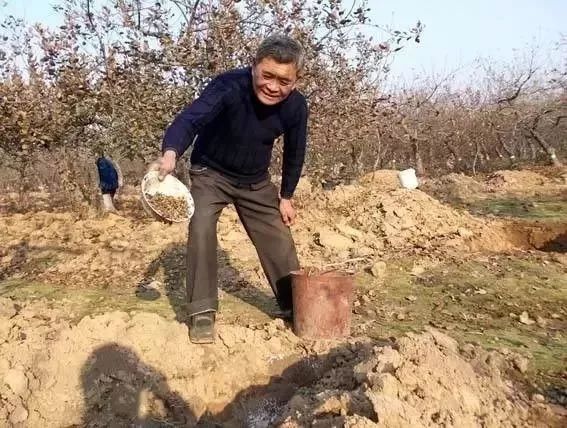
Fertilizer accumulates in the fertilization holes and ditches, and the local concentration is too high, which can induce root rot disease. The correct approach is to first apply organic manure at the bottom of the ditch, then backfill the topsoil, and evenly sprinkle the fertilizer into the fertilizer hole. Use a rake to mix the fertilizer thoroughly with manure and topsoil, and finally cover the bottom soil on the topmost layer.
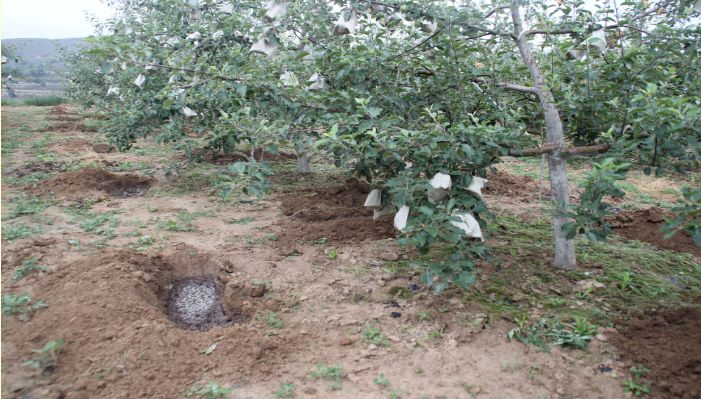
In addition, when fertilizing in autumn, attention should be paid to the fact that farmyard manure must be matured, and chemical fertilizers should be mixed with the soil to prevent damage to the roots caused by heat generation or excessive local concentration due to fertilizer maturation.
There are tricks to applying base fertilizer to fruit trees in autumn, and the best results are achieved when done correctly!
The types of base fertilizers applied in autumn should be "comprehensive":
Although farmyard manure has comprehensive nutrition, it does not fully meet the fertilizer requirements of fruit trees. For example, chicken manure contains 1.63% nitrogen, 1.54% phosphorus, and 0.8% potassium, making it a high phosphorus fertilizer. Therefore, when applying farmyard manure in autumn, various organic matter containing substances should be mixed and thoroughly decomposed before application. According to the survey, the nitrogen provided by organic fertilizers currently accounts for only 30% of the nitrogen required by crops, and about 70% relies on chemical fertilizers for supply. Other phosphorus and potassium fertilizer elements also show a similar situation. Therefore, organic fertilizers should be applied in conjunction with chemical fertilizers. When applying fertilizers, nitrogen, zinc, copper, calcium, etc. should be considered to regulate the balance of nutrients and promote the effective transformation of organic matter. At the same time, in order to fully utilize the only opportunity to deeply plow the soil once a year, microbial agents should be applied in a timely manner to improve soil nutrient activity and organic matter content through deep plowing.
The depth of base fertilizer application in autumn should be "appropriate":
Fertilizer should be applied to the concentrated distribution layer of the root system, that is, to a depth of 20-40 centimeters beyond the branch extension. Young trees are combined with hole expansion and ditch expansion, using circular or strip-shaped ditch application, expanding outward every year until the entire garden is turned over. The result tree should be planted in radial or strip grooves, and can also be spread throughout the garden. This method is used alternately every other year.
The absorption roots of fruit trees are mostly concentrated in soil at a depth of 10-60 centimeters, and the most suitable fertilization depth should be around 40 centimeters. Fruit farmers are accustomed to shallow fertilization, which causes most of the mineral nutrients such as nitrogen, phosphorus, and potassium to remain in the surface soil, especially phosphorus fertilizers. By combining deep plowing and applying organic fertilizer, nutrients from the topsoil can be mixed into the middle and lower layers for root absorption and utilization. Shallow fertilization can cause the root system to float to the surface soil, making it highly susceptible to hazards such as freezing, drought, and flooding, resulting in reduced stress resistance of fruit trees and poor fruit quality.
The distribution of autumn base fertilizer should be "even":
The application of organic fertilizer should be mixed with the soil, so that the soil and fertilizer blend together, and the fertilization ditch should be evenly distributed up and down. According to research, 1/4 of the roots in the underground part of fruit trees are under suitable conditions, growing well and having strong functions, which can meet 3/4 of the nutrient requirements above ground.
This requires creating at least one-third of a good root environment in the underground area, which must be concentrated in the root distribution layer and have evenly distributed soil and fertilizer. Excessive concentration or dispersion of fertilizers makes it difficult to create suitable root growth zones, resulting in unsatisfactory fertilization effects and even causing fertilizer damage, which is extremely detrimental to tree growth.
Applying base fertilizer and watering in autumn should be combined:
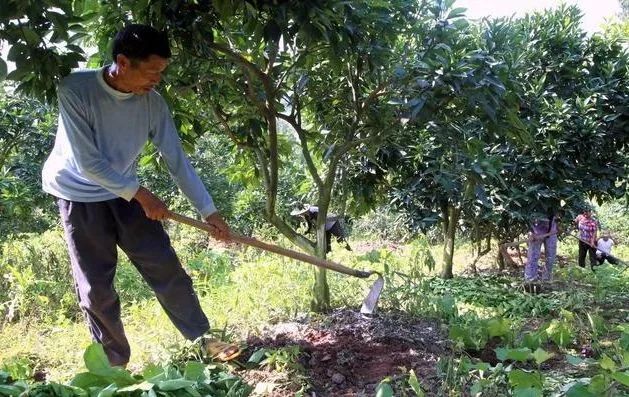
Watering immediately after fertilization can cause a significant loss of nutrients, and the root system is susceptible to fertilizer damage, affecting the normal growth of fruit trees. Therefore, it is not advisable to water immediately after fertilization. However, after the application of base fertilizer, it needs to continue to decompose and be first adsorbed by the soil, and then slowly released when absorbed by the roots, which requires a certain amount of water. Therefore, it is recommended to water before fertilization or water after half a month of fertilization. The current soil moisture is generally good, so we must make good use of every opportunity after rain.
(Source: Plant Protection Knowledge)