News
JINDA Shengyuan activated humic acid series fertilizers have shown remarkable effects in Hami melon fields
Hami melon is known as the "king of melons". As a characteristic fruit of Xinjiang, with the promotion of technological innovation, the planting area of Hami melon has gradually shifted southward. Currently, Hami melon has been planted in Hainan, the southernmost part of China, for more than 30 years.
Due to climate advantages, the cultivation of Hami melons in Hainan is generally staggered compared to the mainland, with 2-3 crops planted per year. Due to the high economic benefits brought by off-season planting, many professional Hami melon growers have also seized this opportunity and come to Hainan to plant Hami melons.
Nowadays, many growers have started planting "cantaloupes" and driving "cantaloupe carts" in Hainan. Mr. Shi, a demonstration household of water-soluble fertilizers with a large amount of elements in Jinda Shengyuan, Hefei, is a farmer from Guangxi. He has been contracted to plant Hami melons on 200 acres of sandy land in Qingshan Village, Fuluo Town, Ledong for 10 years now. In the past few years, his Hami melon yield per mu has been maintained at around 6000 kilograms. This year, with the recommendation of agricultural technology experts and local business managers from the Technology Promotion Department of Jinda Shengyuan Group, a month before planting, he set up a greenhouse and covered it with a canopy. Combined with land preparation, he applied 45% (15-15-15) of Jinda Shengyuan's chelated layer as base fertilizer at once, with a usage rate of 50 kilograms per mu. In the mid-term, he applied 15 kilograms of Heguokang medium element water-soluble fertilizer per mu, and in the fruiting period, he applied 59% (13-6-40) of a large amount of element water-soluble fertilizer twice, with a yield of 5 kilograms per mu. The performance of the first crop of Hami melon far exceeded Mr. Shi's expectations. The vines are thick and the leaves are wide and thick. Green, the root system is as white as silk, and the internode length is even. The overall growth of the plant is very stable, with an estimated yield of nearly 8000 pounds, Significantly increased the yield and quality of cantaloupe while reducing water waste and fertilizer loss.
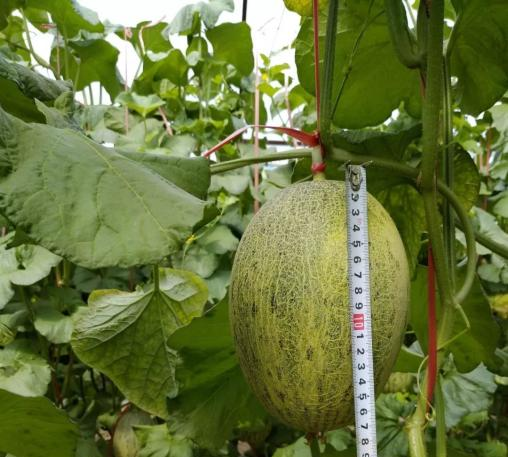 | 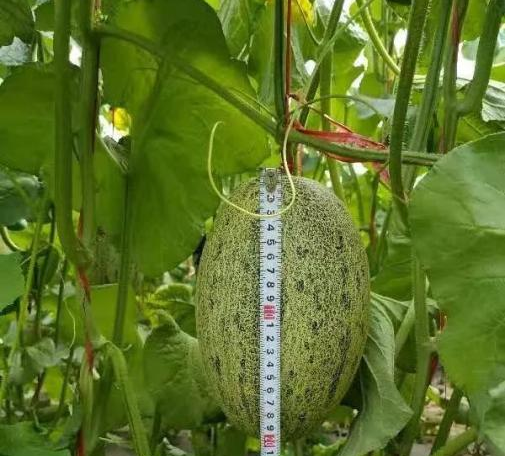 | |
| Comparison: Average longitudinal diameter of 12cm | Using water-soluble fertilizers with a large amount of elements: average longitudinal diameter of 20cm |
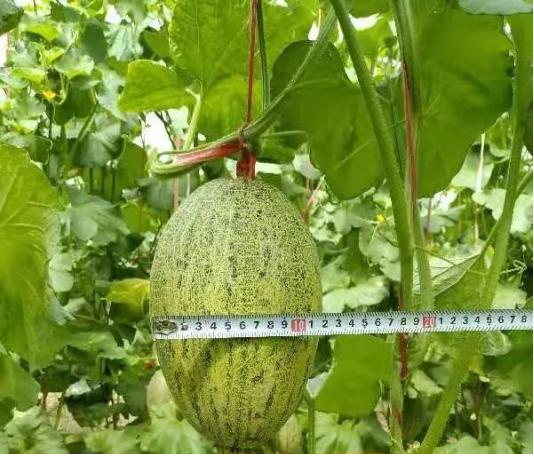 | 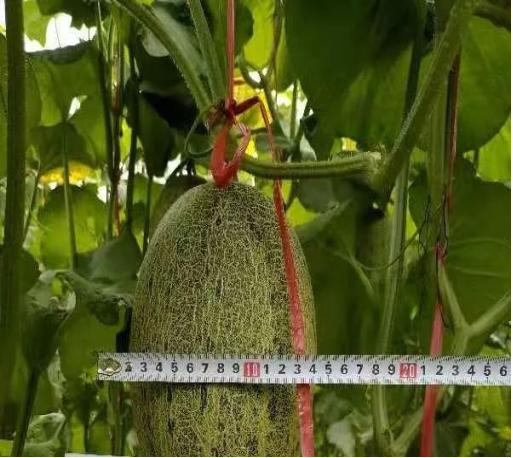 | |
| Comparison: Average transverse diameter of 12cm | Using water-soluble fertilizers with a large amount of elements: average transverse diameter of 20cm |

400-655-2056 / 400-655-2106

Dashiqiao coastal emerging industrial zone, Yingkou, Liaoning Province zip code: 115100